

7 Ways to Beat Static, Hair Protection, Frizz & Wind Damage
Imagine stepping out your front door onto a fresh morning street. Within a matter of minutes, your sleek, shiny blowout transforms into an unruly, frizzy halo. Or even worse, your long hair strands suddenly begin sticking to your winter wool scarf like a static balloon, crackling loudly with every single step you take.
Does that frustrating situation sound completely familiar?
That is the raw reality of seasonal atmospheric hair damage. If you live anywhere across the diverse climate zones of the USA or Europe, you already know this daily battle intimately: freezing winters with dry indoor heating, high-humidity summer mornings, and intense coastal winds that instantly turn a neat mane into a tangled web of knots.
The core cosmetic truth is that your hair fibers require entirely different protection strategies in January than they do in July. Shifting atmospheric conditions alter your cuticle layer daily, which is why adopting a targeted routine for seasonal hair protection is an absolute beauty game-changer.
In this comprehensive style guide, you will discover exactly how to smoothly adapt your daily care routine to beat winter static, block out summer humidity, and insulate your ends against heavy coastal winds. We are covering both long and short hair configurations, anti-static maintenance secrets sourced from Germany and Scandinavia, humidity-proof curl mapping for the USA, UK, and the Netherlands, and tactical product selection rules for sunny coastal regions like Spain and Greece.
Say goodbye to bad hair seasons forever, and let us dive straight in!
About Hair Protection 1
Why Seasonal Hair Protection Matters and Most Women Skip It
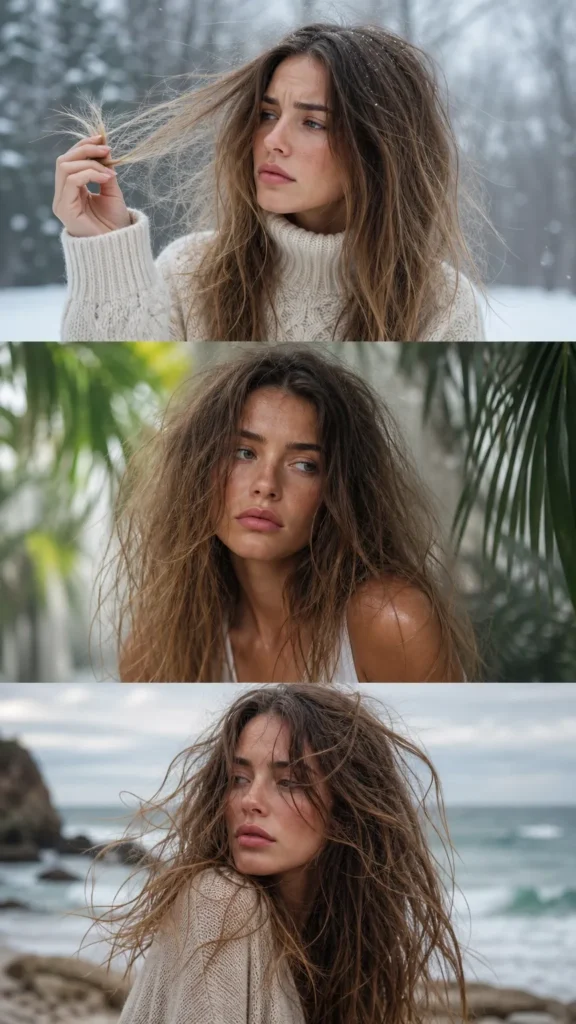
Let us look closely at the hidden structural damage that occurs throughout the year when you completely fail to adjust your product selection to match your local climate shift:
- The Cold Winter Months: A volatile combination of freezing outdoor air mixed with blasting indoor radiator heating completely saps moisture from the hair matrix, resulting in intense static electricity, stubborn flyaways, and brittle split ends.
- The Hot Summer Months: High atmospheric humidity forces porous cuticles to swell up rapidly with environmental water vapors, causing smooth straight hair to poof out aggressively and defined curls to lose their pattern.
- The Coastal Vacation Regions: Continuous, heavy sea winds create immense mechanical friction, leading to severe physical tangles, micro-tears along the shaft, and dehydrating salt crystal buildup.
Despite these dramatic environmental transformations, the vast majority of women make the mistake of using the exact same shampoo, heavy creams, and styling tools all twelve months of the year. Your hair fibers are an organic structure very similar to your skin matrix, meaning they require custom hydration adjustments as the external forecast moves. Implementing a few small, deliberate product swaps can easily save your strands from unnecessary breakage. The best part is that these protective guidelines work flawlessly for long and short hair configurations alike, keeping your style looking polished from head to toe.
Styling Secret: Commit to keeping a simple seasonal hair log inside your phone for one full calendar year. Note the exact weeks when your strands experience sudden frizz or heavy static flyaways. Mapping out these specific atmospheric patterns allows you to build an intentional defense routine, completely eliminating future wardrobe guesswork.
About Hair Protection 2
Winter Woes: Anti-Static Hacks from Germany and Scandinavia

Northern and Central European winters are notoriously brutal on delicate strands. Across Germany and Scandinavia, outdoor temperatures regularly plunge well below freezing, forcing indoor commercial heating systems to run at absolute full blast all day long. This environmental contrast strips every ounce of humidity out of the air, producing an intense buildup of static electricity that causes individual hair strands to cling stubbornly to your face, winter jackets, and synthetic sweaters.
Fortunately, women across these freezing regions have spent centuries mastering ingenious anti-static winter hacks that protect the hair matrix without relying on heavy, greasy styling oils:
- Introduce a Bedroom Humidifier: Bone-dry indoor air is the primary catalyst for winter friction. Running a clean mist humidifier while you sleep adds vital moisture back into the environment, naturally calming down your strands before morning.
- Retire All Plastic Hair Brushes: Plastic bristles generate immense static electricity when dragged down the hair shaft. Swap them out immediately for a high-quality, solid boar-bristle brush, which works naturally to evenly distribute your scalp’s protective lipids while smoothing down loose flyaways.
- Incorporate the Leave-In Brush Mist: Before running a brush through your hair on a freezing morning, lightly spritz a water-based leave-in conditioner spray directly onto the bristles. This damp barrier adds a feather-light touch of moisture that neutralizes static charges instantly.
- The Grounding Touch Trick: Make it a habit to touch a grounded metallic surface, such as a metal doorknob or vanity frame, right before handling your hair. This simple movement safely discharges any accumulated static electricity from your body.
For style lovers rocking long hair, weaving your lengths into a neat, loose braid before pulling on a thick wool sweater or a heavy scarf is an excellent way to prevent the fabric friction that causes static matting. If you are sporting a short bob or pixie cut, rub a single micro-drop of lightweight oil between your palms and lightly glaze the very surface of your crown to lock out friction..
Looking for gentle ways to style without heat damage? Check out Heatless Curls for Fine & Fragile Hair for winter‑friendly curl methods.
About Hair Protection 3
Summer Survival: Humidity-Proof Curls for the USA, UK, and Netherlands
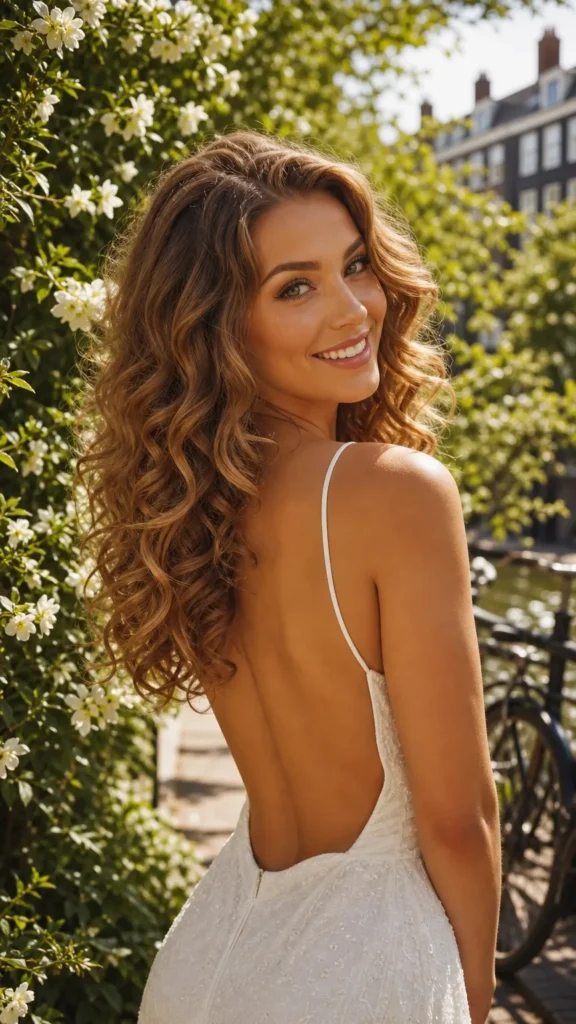
Summer atmospheric humidity is the ultimate, undisputed enemy of a sleek glass blowout. Throughout the USA, especially across the high-humidity South and East Coast regions, as well as the UK and the lowlands of the Netherlands, summer air remains continuously thick with heavy moisture vapors. Under these dense environmental conditions, natural curls instantly frizz out, and straight hair loses its sleek velocity, poofing into an unmanageable shape.
To maintain pristine hair protection and keep your curls looking defined, bouncy, and expensive all day long, you must flip your product application strategy to seal out atmospheric water:
- Begin with a Smoothing Base Wash: Always start your summer wash day using a high-quality smoothing or frizz-control shampoo and conditioner formula that is entirely free of harsh sulfates, laying a clean foundation for styling.
- Apply Styling Products to Soaking Wet Strands: Never wait until your hair has air-dried to a damp stage before applying your curl creams or definition gels. Coating the hair fibers while they are completely dripping wet allows the product polymers to lock in structural moisture, creating an impenetrable shield against external humidity.
- Utilize a Diffuser on Low Heat Settings: When drying your curls, always attach a wide diffuser to your blow-dryer and stick to low heat and speed settings. Blasting fine strands with intense thermal heat aggressively opens up the outer cuticle layer, inviting atmospheric humidity to seep straight into the core.
- Finish with Polymeric Holding Sprays: Seal your completed style using a generous mist of a flexible-hold hairspray specifically formulated with humidity-resistant polymers to prevent sagging.
If you have cascading long hair, master the product sandwich method: apply a lightweight leave-in mist, layer your defining curl cream directly over it, and lock everything down with a strong-hold styling gel. This strategic sequence forms a thick barrier that blocks out heavy exterior moisture. For shorter haircuts, swap out dense creams for a weightless volumizing mousse to prevent your crown from looking flat and weighed down.
About Hair Protection 4
Coastal Wind Tangles: How to Protect Hair Near the Beach

Living alongside a scenic coastline or escaping on a summer beach holiday is fantastic for the soul, but the constant, whipping coastal wind can quickly turn your beautiful lengths into a severely tangled nest. Forcing a traditional brush through dry, wind-tangled hair causes immediate breakage, split ends, and mechanical cuticle damage that ruins your natural density over time.
Whether you are navigating the breezy coastlines of California, exploring beach towns in the UK, or sunbathing along the shores of Spain and Greece, protecting your strands from salt-air friction requires a tactical approach:
- Secure the Hair Before Stepping Outside: Never allow your long hair to fly completely loose in a heavy coastal breeze. Weave your strands into a protective low bun or a neat braid before stepping out onto the sand to eliminate tangles entirely.
- Utilize a Pre-Wind Detangling Shield: Before encountering a breezy shoreline, mist your lengths with a dedicated detangling spray or a light leave-in conditioner. This adds a beautiful, slippery coating to the outer shaft, allowing individual strands to slide past one another instead of locking into tight knots.
- Stick Strictly to Wide-Tooth Combs: When you return indoors after a long day in the ocean air, never attempt to force a hard bristle brush through dry knots. Instead, apply a drop of smoothing serum and gently work through the lengths from the ends upward using only a wide-tooth comb.
- Perform a Rapid Fresh Water Rinse: Sea air carries heavy concentrations of abrasive salt crystals and fine sand particles that dry out the hair fiber. Always rinse your hair thoroughly with clean, fresh water immediately after beach exposure to remove all harsh mineral buildup.
For long hair textures, mastering a structured Dutch plait or an elegant crown braid is your absolute best defense strategy against coastal winds, keeping your lengths safely contained while looking incredibly stylish for holiday photos. For short haircuts, smooth down the surface layers using a fingernail-sized amount of a matte-finish styling pomade or wax, making it significantly harder for a gust of wind to lift individual flyaway strands.
For more protective styles that work against wind, check out Prom Hairstyles for Long & Short Hair
About Hair Protection 5
Sea Salt Spray vs. UV Protectant: Which One for Spain and Greece?

Summer vacations along the golden coastlines of Spain or Greece mean endless sunshine, crystal-clear beaches, and heavy salty air. While you likely want to rock that effortless, textured beach wave look for holiday photographs, your strands desperately need defense against intense ultraviolet damage and severe salt dehydration.
Let us look at the core differences between a texture spray and a protective sun mist to settle the debate:
- Sea Salt Texture Spray: Best used for building immediate matte grip, root volume, and that classic tousled beach wave look. The primary downside is that high salt concentrations can be severely drying to the hair matrix, making it entirely unsuitable for daily use.
- UV Protectant Spray: Best used for blocking solar radiation damage, shielding the hair shaft from environmental fading, and preserving moisture. The primary downside is that it functions purely as an invisible protective coat, meaning it will not add any texture or wave definition to flat locks.
The ultimate styling solution is to utilize both products, but with a highly strategic application method:
- On Active Beach Days: Always mist your entire head with the UV protectant spray first to establish an invisible shield against the sun. Then, apply your sea salt spray exclusively to the mid-lengths and ends to coax out natural texture waves. If you are swimming in the ocean, make sure to reapply your UV sun shield every two hours.
- On Non-Beach City Days: Skip the drying sea salt spray completely. Simply mist your strands with the protective UV spray to prevent sun damage and style your hair as usual.
For women rocking long cascading lengths, applying sea salt spray to damp strands, scrunching the sections, and letting them air dry naturally creates gorgeous movement, but you must make it a strict rule to fully wash the product out at night to avoid morning brittleness. For short cropped hair fashion, maintaining constant UV skin and hair protection is significantly more critical than building matte texture. Short bobs and pixies expose more of the scalp, making it highly prone to sudden sunburns along your part line if left unprotected.
Styling Secret: You can easily create a lightweight, hydrating sea salt alternative right inside your kitchen on a budget. Mix one cup of warm distilled water with one teaspoon of pure sea salt and one teaspoon of melted unrefined coconut oil inside a spray bottle. Shake the mixture thoroughly before use. The addition of coconut oil makes this homemade mist far cheaper and significantly less drying than commercial, store-bought bottles.
About Hair Protection 6
Transitional Seasons: Balancing Your Care When the Weather Shifts

Navigating the transitional months of spring and autumn can feel incredibly tricky for your beauty routine. One random day the climate is unseasonably warm and thick with heavy humidity, and the very next morning it shifts to freezing temperatures with biting winds. This lack of atmospheric consistency confuses your scalp matrix, frequently resulting in sudden oil imbalances or unexpected dry flaking.
To keep your hair balanced through volatile transitional months, incorporate this simple, highly adaptable routine that functions beautifully across both long and short hair configurations:
- Apply a small mist of a feather-light leave-in conditioner spray to your lengths daily. This weightless fluid effortlessly adapts to both sudden external humidity and dry indoor air.
- Keep a travel-sized, anti-humidity finishing spray tucked inside your handbag to instantly smooth down unexpected afternoon frizz.
- On crisp, cold autumn mornings, smooth a single micro-drop of lightweight hair oil over your vulnerable tips before stepping outside to insulate the ends against wind friction.
- Reduce your weekly washing frequency to two or three sessions max, allowing your scalp’s natural, protective lipids to balance themselves out organically.
Smart women plan their routines seasonally, yet transitional months are precisely when the most severe hair damage occurs simply because people stop paying close attention to the forecast. Do not let a sudden spring shift catch your strands off guard.
Styling Secret: During the height of spring, commit to treating your hair to a deep conditioning moisture mask once a week. The back-and-forth atmospheric shifts stress the internal hair matrix significantly more than a stable summer or winter climate alone, making extra nutrition an absolute necessity.
About Hair Protection 7
Your Year-Round Seasonal Hair Protection Calendar

Let us merge all of these global weather rules into one simple, cohesive calendar that you can easily reference throughout the changing months:
The Winter Phase (December to February)
- Implement anti-static home routines, such as running a bedroom humidifier and retiring all plastic styling brushes.
- Treat your strands to a rich, deep conditioning mask weekly to combat dry radiator heating.
- Weave your long hair into loose, protective braids beneath heavy winter scarves to eliminate fabric friction.
The Spring Phase (March to May)
- Transition into a lightweight, water-based leave-in conditioner spray for daily hydration.
- Maintain your weekly deep conditioning mask to soothe weather-stressed strands.
- Begin misting your crown with a dedicated UV protectant spray on bright, sunny afternoons.
The Summer Phase (June to August)
- Master the art of humidity-proof curls by layering your products onto soaking wet strands and avoiding heavy glycerin formulas.
- Apply your protective UV shield daily before stepping out into the sun.
- Use drying sea salt sprays sparingly, and always rinse them out of your hair the same day.
The Autumn Phase (September to November)
- Transition your wash days back to richer, deeply hydrating leave-in creams.
- Schedule a quick salon visit to trim away any frayed split ends caused by summer sun exposure.
- Wear secure, wind-protective updos on breezy afternoons to prevent mechanical knotting.
Print this simple structural calendar out and attach it directly to your bathroom vanity mirror so you always know exactly how to insulate your ends. Your hair will thank you with incredible shine and bounce all year long!
Styling Secret: Snap a high-resolution close-up photo of your hair on the very first day of each seasonal shift. Comparing these photos side-by-side next year will reveal exactly which climate tricks worked beautifully and which months require a slight adjustment in your product lineup.
You Might Like: 1) Heatless Curls for Fine & Fragile Hair 2) Protective Styles for Straight & Wavy Hair
Table of Contents
Which Weather Shift Challenges Your Strands the Most?
Your hair is a beautiful symbol of youth, vitality, and personal expression, and it deserves to look flawless whether it is encountering a winter freeze or a mid-summer sun. Transitioning your routine to align with the external forecast allows your hair matrix to heal from the inside out, completely eliminating bad hair days from your calendar.
If you love exploring protective styling options that hold their shape beautifully across unpredictable environments, make sure to read through our comprehensive style guides on heatless curl methods for fragile strands or discover stunning prom hairstyles for long and short hair to lock in an elegant, weather-proof updo for your next big event! 💇♀️
Stay beautiful, listen to the forecast, and protect your locks with pure confidence!

